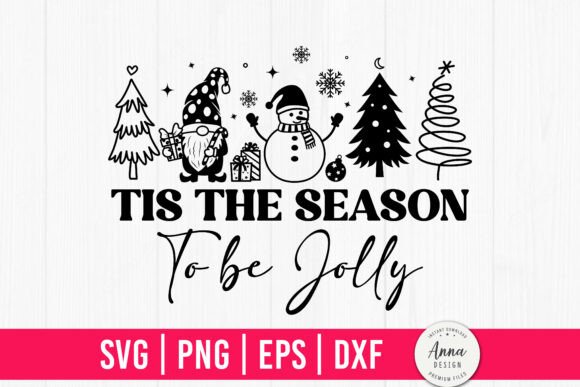
Tis the Season to Be Jolly SVG
When I first opened the Tis the Season to Be Jolly SVG file, I immediately felt that familiar holiday warmth. The phrase itself is a classic, and the way the design is shaped—likely with a cheerful, approachable typographic layout—sets a mood that’s cozy, celebratory, and just a little bit nostalgic. As someone who tests embroidery designs on real fabric, and not just on a screen, my mind instantly started picturing this on a canvas tote, a soft crewneck sweatshirt, or a set of kitchen towels destined for a holiday market. The design’s personality is open and inviting, without being overly complex. That’s a big plus when you’re thinking about how it will translate into stitches.
From an embroidery project perspective, the Tis the Season to Be Jolly SVG acts as a strong starting point. It’s a digital file—originally provided as an SVG, PNG, DXF, and EPS bundle—so it’s built for cutting machines, but with proper digitizing, it becomes a versatile asset for machine embroidery. The clean vector lines, if the file is well-constructed, mean you can scale it without losing detail, which is crucial when you’re bouncing between a small patch and a large back design on a jacket. I always check the integrity of the paths before I begin digitizing, and this type of design, with its straightforward holiday wording, usually holds up beautifully.
Catching the Holiday Spirit in Stitches
The real magic of this design lies in its simplicity. It doesn’t shout—it declares the season with a friendly, jolly tone. When I think about how it will look embroidered, I imagine the letters in a nice satin stitch, maybe with a slight decorative border or some subtle flourishes if the original artwork includes them. The mood it creates is perfect for so many handmade products: think of a child’s first Christmas bib, a personalized gift for a favorite aunt, or a matching set of embroidered aprons for a family cookie-baking day. The design’s emotional appeal is exactly what makes a piece sell quickly at a craft fair or catch a buyer’s eye on an Etsy listing.
I recently tested a similar holiday phrase design for a custom sweatshirt order. The client wanted something that felt both playful and traditional. That’s when I learned that seemingly simple text-based designs can be deceptively tricky. You have to watch the letter spacing, the thickness of thin strokes, and how the fabric will pull the stitches. With Tis the Season to Be Jolly SVG, my first move is always to print a paper template and pin it to the actual garment. I check the size against the hoop, mark the placement, and then digitize a test file with a medium stitch density. I never skip the stitch-out on a scrap of the same fabric—it’s where I catch issues with thread tension, trims, and any small gaps that might fill in poorly.
Which Projects Let This Design Shine?
In my workshop, I’ve learned that not every design fits every product. But this one is surprisingly adaptable. Here’s a quick list of items where I’d confidently use the Tis the Season to Be Jolly SVG after digitizing:
- Tote bags – A natural canvas for holiday phrases. The flat surface allows for crisp stitch definition.
- Sweatshirts and hoodies – The design can sit across the chest or on a sleeve, giving a handmade boutique feel.
- Pillow covers – A plush, embroidered holiday greeting makes a cozy gift or seasonal decor piece.
- Kitchen towels and aprons – These are huge sellers during the holidays, and the phrase feels right at home in a kitchen setting.
- Baby items – A soft onesie with “Tis the Season to Be Jolly” stitched in pastel or metallic thread becomes an instant keepsake.
- Embroidered patches – If you reduce the design and add a border, it can be a lovely patch for jackets or backpacks.
For small business owners and Etsy sellers, the design’s versatility is a real time-saver. You can create a whole product line—cups, towels, shirts, bags—all from one cohesive holiday theme. The key is to adjust the stitch types and colors to match each product. For a tote bag design, I might use a heavier fill stitch on the letters for durability. For a baby item, I’d switch to a softer running stitch with a gentle underlay so the fabric stays stretchy and comfortable.
Thread, Fabric, and the Little Details That Matter
Thread choice can make or break a holiday embroidery. With Tis the Season to Be Jolly SVG, I’ve found that a classic red-and-green palette works beautifully, but don’t be afraid to go monochromatic. A crisp white thread on a dark navy sweatshirt gives a snowy, elegant look. Metallic gold or silver thread can elevate the design for a more premium handmade product, but be cautious—metallic threads require a slower machine speed and a slightly looser tension to avoid breaks. I always keep a sample stitch-out of the design in a few colorways so I can show customers what the finished product will look like.
Fabric texture is another consideration. The design looks best on medium-weight, stable fabrics like cotton canvas, twill, or quality sweatshirt fleece. On thin, drapey fabrics, the stitches can pull and distort the words. On high-pile fabrics like fleece or terry cloth, you’ll need a heavy water-soluble topper to keep the stitches from sinking in. I also test the design on a dark fabric with a light thread and vice versa. The contrast affects how legible the phrase is from a distance, and that’s something buyers notice immediately.
When to Use Extra Caution
Even with a cheerful design, there are moments where you need to pause and think. I’ve learned to be cautious with Tis the Season to Be Jolly SVG in these situations:
- Small hoop sizes – If the lettering is too tiny, the stitch details can blur. Always test the smallest size you plan to use and check if the letters still read clearly.
- Stretchy fabrics – For activewear or thin t-shirts, use a strong cutaway stabilizer and consider a slightly lighter stitch density to prevent puckering.
- Curved surfaces like caps – The design’s horizontal layout might require careful placement. I prefer to digitize it with a slight arc to match the cap’s curve, but that’s an extra step.
- Layered garments – If you’re embroidering on a jacket with a lining, plan for the extra bulk and make sure the design doesn’t get distorted by seams.
- Products that need frequent washing – The design should be digitized with secure lock stitches and tested with a few wash cycles to ensure the letters don’t fray.
These aren’t dealbreakers; they’re just part of the professional embroidery process. When I’m preparing a batch of holiday gifts for a client, I’ll run a stress test on a sample piece and wash it two or three times. If the design holds up, I’m confident selling it.
From a Digital File to a Finished Keepsake
One thing I always remind fellow makers: the Tis the Season to Be Jolly SVG is a digital design file. It’s not an embroidery file ready to load onto your machine. That means you’ll need to digitize it yourself or use a reliable auto-digitizing software with careful manual adjustments. I prefer to do it by hand—I import the SVG into my digitizing program, trace the letters, and assign stitch types. For a phrase like this, I lean on satin stitches for the main lettering, with a nice underlay to give it dimension. If the original design includes any decorative elements like stars or holly, I might use a fill stitch for those areas to add texture.
Stitch density is a critical part of the process. Too dense and the fabric will feel stiff and might even pucker; too light and the design looks thin. I aim for a density that gives good coverage on cotton or canvas, then adjust from there. I also check the design in a black-and-white mockup to see if the contrast holds up without color. It’s a trick I learned early on—if the design looks strong in black and white, it’ll look fantastic in any thread palette.
Making It Work for a Small Business
For those of us selling handmade products, the Tis the Season to Be Jolly SVG can be a real asset. It’s the kind of design that photographs well, looks appealing in a printable mockup, and speaks directly to holiday shoppers. I’ve used similar designs to create a cohesive brand look for a seasonal collection—everything from packaging stickers to thank-you cards carries the same phrase. That consistency builds customer trust and makes your booth at a craft fair look polished and professional.
However, before you list a finished product on Etsy or show it off at a boutique, you need to clear up the commercial use rights. The product description didn’t specify licensing, so I always recommend reaching out to the seller or checking the terms that came with the file. As a designer, I never assume a design is cleared for commercial embroidery unless it’s explicitly stated. That one step protects your business and keeps everything above board. Once you’ve confirmed the licensing, you can confidently sell custom apparel, embroidered patches, or personalized gifts featuring this cheerful phrase.
Final Thoughts Before You Stitch
After working through the testing process, I’d say the Tis the Season to Be Jolly SVG is a strong addition to a holiday embroidery collection. It’s not overly complicated, which means it won’t take hours to digitize or test, and it has that broad appeal that makes it a safe bet for client projects or your own inventory. The design’s mood is genuinely jolly—it feels like it belongs on a mug rug, a gift bag, or a cozy throw pillow. As long as you take the time to dial in the stitch settings, match the stabilizer to the fabric, and check the scale for your intended product, this design will serve you well.
I always keep a few holiday designs on hand that I can quickly adapt for last-minute orders. Tis the Season to Be Jolly SVG has earned a spot in that folder. Whether you’re making a single custom tote for a friend or a whole batch of boutique items for your shop, it’s a design that feels both timeless and joyful. Just remember to test, test, and test again—and then enjoy watching your customers smile when they see that familiar festive greeting brought to life in thread.