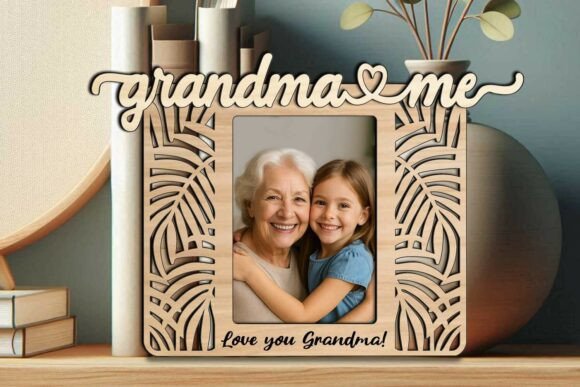
SVG Jungle Leaves Grandma Me Design Gift
A Designer’s First Glance: Warm, Whimsical, and Purpose-Built
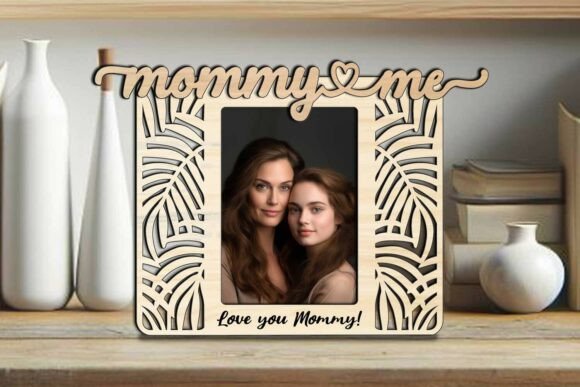
Opening SVG Jungle Leaves Grandma Me Design Gift feels like unrolling a quiet invitation—not flashy, but full of intention. It’s not a bold monogram or a dense floral mandala. Instead, it’s layered, organic, and gently asymmetrical: curling leaves framing a soft negative space where a photo slides in. The jungle motif reads as tender—not wild or untamed—but nurturing, like ivy climbing a porch post or ferns unfurling beside a rocking chair. That tells me right away: this isn’t for high-energy streetwear or festival merch. It’s made for handmade products that carry emotional weight—custom baby blankets, embroidered tea towels for Mother’s Day, or boutique pillow covers sold at local craft fairs.
Where It Shines in Real Embroidery Projects
I recently tested SVG Jungle Leaves Grandma Me Design Gift on a linen-cotton blend tea towel—no photo pocket, just the leaf frame stitched in moss green and cream thread. The result? Instant warmth. The leaf outlines held crisp satin stitch definition without bleeding, and the open center gave breathing room—critical when stitching on absorbent, textured fabric. It also translated beautifully to a lightweight cotton tote bag: minimal fill stitch density meant no stiffness, and the design scaled cleanly from 4” to 6” without losing its delicate rhythm.
For small business owners and Etsy sellers, this is a quietly versatile embroidery file. It works especially well as a *personalized gift anchor*: pair it with a simple “Grandma & Me” script (added separately) on a onesie, or use it as a standalone frame motif on a baby quilt label. As an applique design, the leaf shapes are generous enough to handle raw-edge or fused techniques—no tiny, finicky corners to fray during washing. And because it leans into natural flow rather than geometric precision, it softens the look of structured items like denim aprons or canvas caps without feeling out of place.
Where to Proceed Thoughtfully
That same organic looseness means SVG Jungle Leaves Grandma Me Design Gift needs mindful placement on certain substrates. On highly stretchy fabrics—think ribbed knit onesies or lightweight sweatshirts—stabilizer choice becomes non-negotiable. A medium-weight cutaway helps preserve the gentle curves of the leaves; tear-away alone may let those outer edges ripple. Similarly, on dark fabric, avoid ultra-fine light thread—it’ll get lost in texture. Opt instead for matte poly or viscose in mid-tones (sage, charcoal grey, warm taupe) for better contrast and depth.
Don’t force it into tight spaces. While the overall shape is graceful, some inner leaf junctions have subtle overlapping layers—fine for a 5”+ hoop, but potentially congested in a 3” hoop on a curved surface like a cap visor. And though it’s labeled under Laser Engraving and Graphics, remember: this is a vector-based embroidery file, not a raster image. If you’re adapting it for machine embroidery, confirm whether your software handles SVG-to-PES conversion smoothly—or if you’ll need to simplify paths first.
What It Adds to Your Finished Product—Beyond Stitching
This isn’t just about thread count or hoop fit. SVG Jungle Leaves Grandma Me Design Gift elevates perceived value through restraint. Customers notice the absence of clutter—the way the leaves suggest connection without spelling it out. That subtlety builds trust: it feels handmade, not mass-produced. For craft businesses, that translates directly to higher perceived quality and stronger brand consistency—especially if your shop centers around intergenerational gifting or slow-made home goods.
It also boosts giftability. Unlike trend-driven motifs, this design avoids dating itself. A grandmother receiving a pillow cover with this frame won’t think “2024,” she’ll think “this was chosen *for us*.” That emotional resonance drives repeat buyers and word-of-mouth referrals—especially among customers shopping for milestone moments: first birthdays, retirement gifts, or holiday keepsakes.
Practical Notes Every Embroidery Designer Should Run Through
- Always test on scrap fabric first—especially if using textured weaves or blends. Linen, terry cloth, and chambray all react differently to the same stitch density.
- Check thread color contrast in both natural and artificial light. What reads softly in daylight may vanish under kitchen lighting.
- Review stitch density before sending to the machine. Dense fill areas near leaf stems can cause puckering on lightweight cotton—consider switching those sections to a lighter fill or running stitch outline.
- Confirm hoop size compatibility with your most-used hoops. If you rely heavily on 4” round hoops, verify the widest leaf span fits comfortably with ¼” margin.
- Inspect small details at 200% zoom in your embroidery software. Look for stray nodes or overlapping vectors that could cause jump stitches or thread breaks.
- Test black-and-white mockups—not just color. This reveals balance issues and silhouette clarity at a glance.
- Compare light and dark fabric backgrounds side-by-side. Some leaf shadows or gradients only read clearly on one tone.
- Use proper stabilizer: cutaway for knits, tear-away for stable wovens, and fusible + tear-away for lightweight silks or rayons.
- Verify licensing before selling finished items or digital embroidery files. Since the product description emphasizes gifting and personal use, clarify commercial rights if you plan to offer it as part of a bundle or subscription.
Final Thought: A Frame for Feeling, Not Just Fabric
SVG Jungle Leaves Grandma Me Design Gift doesn’t shout. It leans in. That’s its strength—and why it’s such a smart pick for designers who build long-term relationships with their customers. Whether you’re stitching a single custom order or scaling production for your small shop, this embroidery file supports storytelling over spectacle. It reminds buyers—and you—that the best handmade products aren’t just seen. They’re felt.