Christmas Story Cards: A Graphics & Crafts Asset Review
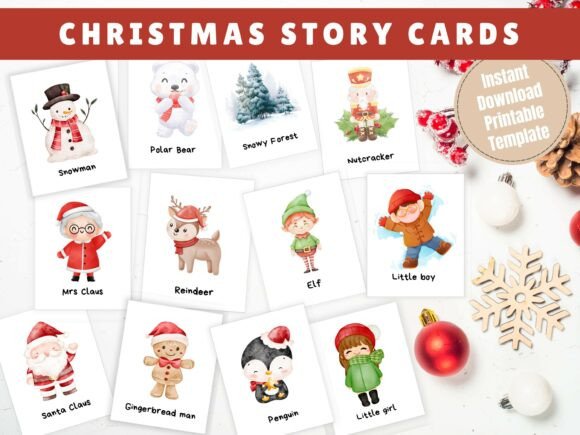
When I first opened the Christmas Story Telling Card for Kids file set, I was immediately struck by the warm, playful energy these printable story cards carry. The cute Christmas images feel hand-drawn and whimsical, with just enough detail to spark a child's imagination without overwhelming the visual space. As someone who has spent years testing digital products for Etsy shops, Creative Fabrica listings, and print-on-demand catalogs, I know that an asset's first impression matters. This one lands in a sweet spot — it's festive without being garish, gentle without being forgettable, and commercial enough to fit into a wide range of seasonal product collections.
The artwork leans into a nostalgic, storybook aesthetic. The characters and holiday motifs feel approachable, almost like vintage gift wrap illustrations reimagined for modern crafters. For sellers targeting young families, preschool educators, or holiday gift buyers, this visual personality can pull a strong emotional response. That emotional pull is exactly what moves a digital product from a browser's passing glance to a confirmed purchase. When I evaluate a graphic design asset like this, I ask one question: does it make the end product feel more valuable? With these story cards, I believe it does.
First Impressions from a Seller's Perspective
I tested the files across multiple devices and mockup scenarios before forming any conclusions. The printable design comes cleanly organized, which is a quiet but critical detail for anyone building a digital download shop. Customers expect a seamless experience. If I have to spend thirty minutes renaming messy files before I can even create a listing preview, the asset has already cost me time. This set was easy to unpack, easy to preview, and easy to start working with — exactly what a busy seller needs during the holiday rush.
The illustrations themselves carry a soft, inviting charm. They're cute without slipping into juvenile territory, which means they can appeal to a broader age range. A parent might use these cards with a toddler, but an older sibling can join in the storytelling too. That versatility matters when you're writing product descriptions and positioning your listing for maximum reach. From a commercial design standpoint, the artwork feels intentional and cohesive, with a consistent color palette that ties the whole set together.
Where This Design Shines in Product Creation
I see this asset working beautifully as a core product on its own. A straightforward printable set — the story cards packaged with a simple instruction sheet — can become a strong listing on Etsy or Creative Fabrica. The build your own Christmas story card concept invites interaction, and interactive products tend to generate positive reviews. Parents love anything that engages children away from screens, and a printable storytelling activity hits that desire perfectly.
Beyond the obvious standalone product, these cards can be remixed into a variety of sellable formats. I tested a few concepts in my own workflow and found the artwork adapts surprisingly well. Here are some product directions I would explore:
- Printable story card bundles — Combine these with other holiday-themed activities for a higher-priced digital pack.
- Canva templates — Import the cards into a Canva project, add editable text fields, and sell as a customizable storytelling template.
- Scrapbooking kits — Extract individual illustrations to create decorative elements for digital or physical scrapbook pages.
- Social media graphics — Use the cute Christmas images as standalone clipart for blog posts, Pinterest pins, or Instagram stories.
- Nursery or playroom wall art — Enlarge selected cards into printable art prints for a cozy seasonal decor touch.
- Greeting card inserts — Nestle a story card inside a folded holiday card for a unique, layered product.
Each of these directions taps into a different buyer segment, which is exactly how I like to stretch a single design asset across multiple revenue streams. The key is testing each concept thoroughly before committing to a full listing.
Testing the Asset Across Different Product Types
I ran this set through a series of practical tests. First, I printed the cards on matte cardstock at 100% scale. The lines stayed crisp, and the colors translated well from screen to paper — something I never take for granted with printable designs. I then cut the cards using a paper trimmer and a Cricut machine. The straight-cut edges were clean and predictable, which is essential for buyers who expect a frustration-free experience.
Next, I tested the artwork as PNG design elements inside a Canva template. I built a simple holiday storytelling worksheet and placed the cards as decorative accents. The transparent backgrounds held up perfectly, with no jagged edges or stray pixels. This is a huge relief for anyone who has wrestled with poorly isolated clipart. I also mocked up a few print-on-demand products — a mug, a tote bag, and a children's t-shirt — using the illustrations as central design elements. The cute characters read well on fabric and ceramic surfaces, especially when paired with a soft, rounded sans serif font.
For SVG design users, I tested the cutting paths on a Cricut Explore Air 2. The shapes cut cleanly, though I recommend doing a test cut on scrap material before committing to expensive specialty paper. The cut lines are not overly intricate, which actually works in the design's favor. Complex cuts can frustrate casual crafters and lead to returns or negative feedback. Simpler cuts mean more successful projects and happier customers.
What Kind of Buyer Will This Attract?
I always think about the end customer before I decide whether to build a product around an asset. For this set, the primary audience is clear: parents of young children, grandparents looking for holiday activities, preschool teachers, and homeschool families. These buyers are searching for printable design solutions that are easy to access, simple to print, and quick to engage children. They're not looking for complicated crafts that require a dozen supplies. They want something they can download and use within minutes.
The secondary audience includes creative entrepreneurs who will repurpose the artwork into their own products. A Canva template seller might use these cards as decorative elements inside a larger holiday planner. A sticker shop owner could isolate individual characters and create a Christmas sticker sheet. A blogger might use the illustrations to break up text in a holiday roundup post. The more I studied the artwork, the more I saw these secondary applications emerging naturally.
Maximizing Listing Appeal and Visual Presentation
When I prepare a product listing, I think heavily about the product mockup strategy. Thumbnails sell the click, and the first mockup image needs to communicate value instantly. With these story cards, I would stage the main mockup image to show a child's hands holding a card, maybe with a warm, blurred background of a Christmas tree. The second mockup could show the full set fanned out on a wooden table. The third could display a single card enlarged to show the illustration quality.
I also tested how the artwork performs on different background colors. On white, the cards feel clean and printable. On a soft cream or kraft paper texture, they take on a more rustic, handmade quality. On a dark background, the colors can lose some buoyancy, so I would avoid placing these on black or deep navy unless I adjusted the contrast. These small decisions affect visual hierarchy and perceived product quality, and I've seen similar tweaks shift conversion rates by double digits.
Pairing Fonts and Building a Cohesive Brand Look
One of the most overlooked aspects of selling graphics and crafts is typography pairing. I spent an afternoon testing different font families alongside these story cards. A rounded serif font gave the product a classic, storybook quality that felt aligned with the artwork's nostalgic charm. A clean sans serif font modernized the look slightly and worked well for instructional text or product descriptions. A soft script font added warmth but needed careful placement to avoid competing with the illustrations. A playful handwritten font leaned into the childlike theme but risked feeling too casual for a premium product.
My recommendation for sellers: choose one display font for titles and one simple body font for any accompanying text. Let the illustrations do the heavy lifting. The artwork is strong enough to carry the visual weight, and overcomplicating the typography can dilute the product's appeal.
Where to Use Caution
No asset is perfect for every application, and I've learned to be honest about limitations. These story cards are not ideal for very small sticker designs. The charming details that make them work as printable cards can become muddy when scaled down to tiny sticker sizes. I also found that the illustrations, while lovely, do not suit every product category. For a sleek, modern brand identity project, these would feel out of place. They belong in the world of warm, cozy, family-oriented products — and that's a strength, not a weakness.
For Cricut project sellers, note that the cutting lines assume a certain level of user confidence. I would include a simple cutting guide or a brief instruction sheet with any product listing to reduce customer confusion. For sublimation design use, test the colors on your specific substrate before offering a finished product. Sublimation can shift colors unpredictably, and holiday reds are notoriously tricky.
Practical Seller Notes Before You List
Based on my testing, here are the steps I would take before publishing a product using this asset:
- Test print on multiple paper types — matte cardstock, glossy photo paper, and standard copy paper — to see how the colors shift.
- Preview as a marketplace thumbnail — shrink the mockup to Etsy thumbnail size and check if the visual still reads clearly.
- Check file resolution — confirm all files are at least 300 DPI for print products and that PNGs have true transparency.
- Organize customer files — create a clean folder structure with clearly labeled file types so buyers can navigate easily.
- Verify commercial licensing — confirm the license allows finished product sales, not just personal use, and keep a copy of the license for your records.
- Write a genuine product description — explain exactly what the buyer receives, how to use the cards, and what materials they might need.
- Create a branded look — use consistent colors and fonts across your listings so your shop feels cohesive and professional.
These steps separate a thoughtful seller from a rushed one. In a crowded creative marketplace, small details build customer trust and encourage repeat purchases.
Final Thoughts from a Product Creator's Lens
After spending real time with the Christmas Story Telling Card for Kids, I can say this is a solid, versatile graphic design asset for seasonal product creation. It is not a one-size-fits-all solution, but it doesn't need to be. The artwork knows what it is — a warm, engaging, print-ready storytelling activity — and it executes that purpose well. For someone building a digital product shop, a holiday collection, or a print-on-demand catalog, this set offers genuine value.
The build your own Christmas story card concept adds a layer of interactivity that many printable products lack. When a buyer can see their child actively engaged with a product, they're far more likely to leave a positive review and recommend the shop to friends. That organic word-of-mouth, combined with strong listing visuals and a well-organized file set, can turn a seasonal product into a recurring bestseller.
I've reviewed hundreds of design assets over the years, and the ones that succeed commercially share a common thread: they respect the seller's time and the buyer's experience. This set does both. Print it, test it, package it thoughtfully, and you'll have a product that feels genuinely worth the price. For anyone in the handmade business space or the small business branding world, this is the kind of asset that quietly builds a reputation for quality.